OK, so I don't need anyone to remind me that I haven't exactly been prolific over the past few years when it comes to posting on Gimme LEGO.... That having been said, what I have posted provides a big clue to the identity of possibly my greatest passion when it comes to LEGO, namely space sets. A quick skim of the index of previous posts reveals that even if you exclude Star Wars I've served up significantly more reviews of space sets than of any other theme; vintage space sets such as 924 Space Cruiser, 6896 Celestial Forager and 6897 Rebel Hunter have been particularly well represented. A recent trawl through some of those old reviews whetted my appetite for more, so I thought I'd dig out an old space set from a subtheme that I'd not previously covered on Gimme LEGO and share it with you.
6900 Cyber Saucer was released in 1997 as part of the UFO subtheme of LEGO Space. The front of the box (above) looks frankly psychedelic, showcasing the completed craft flying above a green quasi-organic planet surface which is almost as retina-searing as the trans-neon green accents of the ship itself. Blurred clouds of magenta space dust and stars provide a suitably vivid backdrop. The back of my bashed box (below) is dominated by images of a couple of dubious-looking alternate builds. There are also a couple of panels which illustrate play features of the set, namely a rotation function and what appears to be a temperature-sensitive print on one of the elements.
The front of the instruction booklet (below) features the same image as the front of the box, but with one interesting difference, specifically the inclusion of an alternative set number (6999) alongside the actual set number. I initially assumed that 6999 was the number of the set in the US or elsewhere, but it turns out that 6999 was in fact the set number of a limited edition bundle consisting of a copy of 6900 plus a hard plastic promotional mask. The instruction booklet comprises 15 pages, all of which are occupied by building instructions; there's no advertising, which is always a bit of a shame in older sets, while the back cover is pretty much identical to the back of the box and therefore not shown here.
The set contains a solitary minifigure, designated as UFO Zotaxian Alien - Blue Officer (Commander X) by Bricklink. This minifigure only appears in a single set, 6975 Alien Avenger, in addition to 6900 and 6999. The torso and legs, with their intricate prints, are exclusive to this minifigure. The black breastplate and shoulder protector is shared with a number of other minifigures across the UFO and Insectoids space subthemes, while the light grey printed helmet is shared with a UFO Zotaxian Red Pilot minifigure which appears in a number of other UFO sets.
Beneath the Predator-esque helmet is a printed trans-neon green minifigure head. As was the case for the printed torso and legs, the head print is exclusive to this particular minifigure. There's no back print on the head.
The breastplate and shoulder protector also provides substantial protection for the upper back. In marked contrast to the extensive and complex printing on the front of the minifigure there's no printing at all on the back of the helmet, torso or legs.
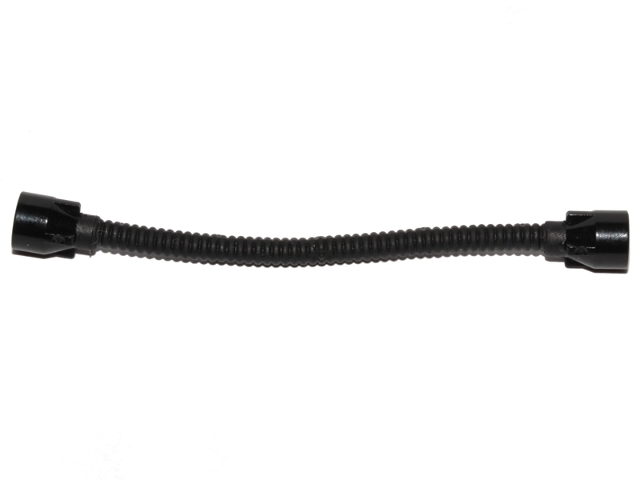
Moving on to the saucer, the shape is largely defined by four 10 x 10 x 2 1/3 quarter saucer top panels. Two of these panels are trans-neon green in colour and have appeared in just 4 sets including this one and 6999, while the other two are printed old grey left and right variants which have each appeared in a total of 5 sets. The orange, black and silver prints on the latter two elements are great, featuring a stylised representation of the alien minifigure helmet from above together with some additional detailing. The quarter panels surround a simple brick-built cockpit containing a solitary red seat. A couple of decorative black 8.5L flexible hoses attach to the sides of the cockpit beneath the panels, while a pair of 3 x 5 deltoid panels attach to the outside edge of the saucer on opposite sides. Given the shiny silver stickers which are attached to them I suspect that they're supposed to be solar arrays. In addition to the deltoid panels, the exterior of the saucer is embellished with numerous other attachments including trans-neon green 8H whip antennae, black 4 x 4 inverted dishes, a minifigure loudhailer tipped with a trans-neon green 1 x 1 cone, and a minifigure space scanner tool. All of the attachments can be either rotated or tilted on small hinges, thus boosting the play value.
The cockpit is enclosed by a trans-neon green 6 x 6 octagonal canopy which is hinged at the rear to provide easy cockpit access. A black 2 x 2 round tile sits on top of the canopy. This tile is decorated with a heat-sensitive sticker, which is something that I've never encountered in a LEGO set before. When the sticker is cold the central area is blank, but when the sticker is pressed and warmed with a fingertip a dark green pattern appears in the central area. This 'play feature' is demonstrated in the instruction booklet (below). The sticker in my copy of the set shows a faint olive green pattern even when untouched, however, similar to what you can see here; I'm not sure whether that's because the ambient temperature is currently quite high in my LEGO room, or just because the sticker is now at least 23 years old and therefore not operating quite as efficiently as it was when it was new.
The saucer sits on top of a simple landing stage. This is supported at its periphery by four light grey bi-level wings and centrally by a pillar which incorporates four black 2 x 2 x 2 stands. The bi-level wings are quite rare in light grey, having appeared in just four sets in this colour including 6900 and 6999. There's a black 2 x 2 x 2 container mounted on one of the peripheral supports. The open face of the container is enclosed by a trans-neon green door which opens to reveal a printed tile that's presumably supposed to represent tech of some sort. The landing stage is topped by a red 4 x 4 turntable with square base.
The neon-green and light grey elements incorporated into the landing stage provide some welcome consistency with the saucer's colour scheme. The saucer fits neatly on top of the landing stage, and since the only point of attachment is the 4 x 4 turntable it can consequently rotate freely through 360 degrees.
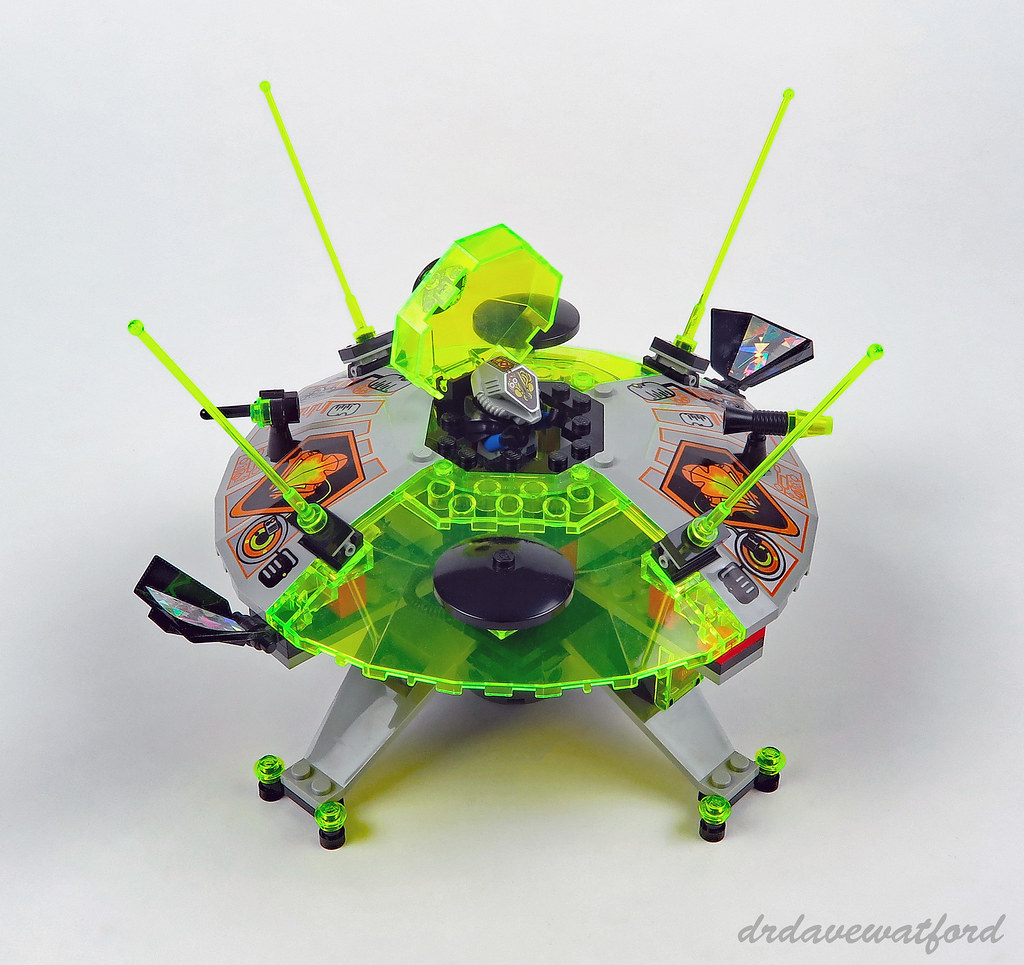
I have to admit that I was initially quite sceptical about this set, and was ready to pretty much write off the UFO subtheme as a poor relation of the much-loved Classic Space sets of the late 1970s and early to mid 1980s. The colour scheme is less appealing to me than the palette of the older space sets, and the preponderance of large, prefabricated elements such as the 10 x 10 quarter panels and the landing stage supports made the build all too brief and had me wishing that I had chosen to assemble a set which didn't rely so heavily on such short-cuts. Now that I've built it, however, I'm feeling a little more charitable - I like the minifigure, the saucer is more swooshable than I expected, and the build is crammed with play features - literally everything attached to the upper surface of the saucer can be tilted or rotated and the saucer spins freely on its landing stage. Furthermore, the design does a decent enough job of aping the cliched flying saucer stereotype, and I'm mindful that there are probably legions of twenty-somethings out there who look back misty-eyed at the UFO sets of their youth the same way as older AFOLs revere the Classic Space sets.
Set 6900 Cyber Saucer contains 114 parts and was released back in 1997. There's clearly love for the set out there as at time of writing the cheapest complete boxed example of the set is listed at almost £50 plus shipping on Bricklink. Complete unboxed examples start at about half that, however, and you might also be able to find one cheaper on eBay.
Showing posts with label lego space. Show all posts
Tuesday, 19 May 2020
Friday, 1 September 2017
Retro Space Revisited
I always enjoy building and writing about vintage space sets, and judging by the number of views that my Space Police post got last time out plus the comments on the Gimme Lego Facebook page it seems that I'm not the only one who enjoys wallowing in LEGO Space nostalgia. I've therefore decided to focus on another long-retired LEGO space set today, this time from the M-Tron subtheme.
The M-Tron subtheme of LEGO space consists of a total of eight sets released in 1990 and 1991. In addition to these eight sets, LEGO released instructions for an additional M-Tron model - 6862 Secret Space Voyager - which could be built by combining parts from three of the retail M-Tron sets. All of the M-Tron sets featured a vehicle of some description, and the majority of the sets utilized magnets, a first for LEGO Space I believe. In this review I'll be focusing on 6896 Celestial Forager, a mid-size M-Tron set released in 1990.
Unlike 6897 Rebel Hunter which I reviewed a few weeks back 6896 Celestial Forager is too small to merit a cardboard tray inside the box. As was the case for 6897 a laser grid forms the backdrop to an image of the completed build on the front of the box (above) although this time the grid is purple rather than green. Again similar to 6897 the vehicle is traversing a sandy planet surface, albeit at ground level this time. A price tag from departed UK retailer Woolworths is stuck over the LEGO logo on both the front and back of the box and indicates that the set retailed for £10.49 back in 1990. The back of the box (below) is split into a number of panels featuring alternate builds, and the inclusion of magnets is also highlighted.
The instruction booklet is in fact a thrice-folded A3-sized sheet which is printed on both sides. Although the cover panel (below) predictably shows an image of the completed build, here the vehicle is photographed from behind in contrast to the side-on view to be found on the front of the box. The instructions break the build into 14 principal steps, not including assembly of the minifigure.
The set contains a single minifigure, named by Bricklink as M-Tron with Airtanks. This minifigure has appeared in a total of ten sets, unsurprisingly all from the M-Tron subtheme given the prominent M-Tron logo printed in the middle of the red torso.... In addition to gracing this minifigure, the torso can also be found as a part of two other minifigures. All other components of the minifigure, namely the white legs with black hips, the yellow head printed with a standard grin pattern, the black helmet and airtanks, and the trans-neon green visor, have been widely distributed in many sets.
Below you can see the minifigure from the rear with the helmet removed. There's no printing on the back of the head or the torso.
With the set's single minifigure assembled it's time to build the vehicle. The Celestial Forager consists of front and rear sections joined to each other by a pair of black 2 x 4 hinge plates with male and female articulated joints. There's also an upper bridge joining the front and rear sections, on top of which is a black inverted webbed 6 x 6 dish. The upper bridge features a faintly Heath Robinson-esque mechanism utilising a pair of 2 x 2 turntable plates together with a 1 x 2 Technic brick, a modified 2 x 2 plate with pinholes and 4L Technic axle to ensure that the two sections of the vehicle can still articulate at the hinge with the bridge in place. The front section of the vehicle includes a cockpit which incorporates a red cockpit space nose with printed M-Tron logo; this element has only appeared in a total of three sets including this one. A pair of chainsaw bodies are attached to the nose at an angle, one on either side; each sports a different 1 x 1 tile printed with a button design and a computer display design respectively. Both tiles have appeared in fewer than 10 sets in total. The vehicle's four black hard plastic 35mm x 31mm wheels attach to the chassis via red modified 2 x 2 bricks with pin.
The rear section of the vehicle is basically a trailer upon which a crane is constructed. A pair of black cylindrical magnets anchor the crane at its base. One of my most memorable brushes with LEGO cylindrical magnets was when I built 10030 Imperial Star Destroyer, and since then whenever I encounter them I recall that epic build. One of the magnets clicks into a 2 x 2 magnet holder which comes in a number of varieties; the 'short arm' variety found within this set can only be found in one other set, and the other varieties are only marginally more common. The crane's boom is formed from a 2 x 4 x 5 inclined support stanchion. A further cylindrical magnet is attached at the top of the boom, this time via a red 2 x 3 magnet holder. Cargo is provided in the form of a red 2 x 2 x 2 container; the variant supplied in this set has solid studs and has only ever appeared in five sets in this colour. The container has a printed light grey door which can only be found in seven sets, and inside the container are a pair of trans-neon green 1 x 1 round plates.
The main play feature of the set is the crane. As shown in the picture below, the boom can be lowered by disengaging the pair of magnets at the base of the crane, and the cargo container can be detached by disengaging the magnets at the end of the boom. As previously mentioned, the vehicle can bend in the middle thanks to the inclusion of a hinge.
Although I'd have to say that 6896 Celestial Forager falls some way short of being a "must-have" set, it's nevertheless an interesting step along the road from the earliest LEGO Space sets to present day offerings and it's well worth the £10 plus shipping that I paid for my boxed, complete copy a few years back. While that's admittedly inexpensive by current standards, the set can still be acquired for a relatively modest sum now - at time of writing complete boxed examples are available on Bricklink for as little as £15 plus shipping, which is less than what the set, originally priced at £10.49 back in 1990, would cost now if adjusted for inflation.
The M-Tron subtheme of LEGO space consists of a total of eight sets released in 1990 and 1991. In addition to these eight sets, LEGO released instructions for an additional M-Tron model - 6862 Secret Space Voyager - which could be built by combining parts from three of the retail M-Tron sets. All of the M-Tron sets featured a vehicle of some description, and the majority of the sets utilized magnets, a first for LEGO Space I believe. In this review I'll be focusing on 6896 Celestial Forager, a mid-size M-Tron set released in 1990.
Unlike 6897 Rebel Hunter which I reviewed a few weeks back 6896 Celestial Forager is too small to merit a cardboard tray inside the box. As was the case for 6897 a laser grid forms the backdrop to an image of the completed build on the front of the box (above) although this time the grid is purple rather than green. Again similar to 6897 the vehicle is traversing a sandy planet surface, albeit at ground level this time. A price tag from departed UK retailer Woolworths is stuck over the LEGO logo on both the front and back of the box and indicates that the set retailed for £10.49 back in 1990. The back of the box (below) is split into a number of panels featuring alternate builds, and the inclusion of magnets is also highlighted.
The instruction booklet is in fact a thrice-folded A3-sized sheet which is printed on both sides. Although the cover panel (below) predictably shows an image of the completed build, here the vehicle is photographed from behind in contrast to the side-on view to be found on the front of the box. The instructions break the build into 14 principal steps, not including assembly of the minifigure.
Below you can see the minifigure from the rear with the helmet removed. There's no printing on the back of the head or the torso.
With the set's single minifigure assembled it's time to build the vehicle. The Celestial Forager consists of front and rear sections joined to each other by a pair of black 2 x 4 hinge plates with male and female articulated joints. There's also an upper bridge joining the front and rear sections, on top of which is a black inverted webbed 6 x 6 dish. The upper bridge features a faintly Heath Robinson-esque mechanism utilising a pair of 2 x 2 turntable plates together with a 1 x 2 Technic brick, a modified 2 x 2 plate with pinholes and 4L Technic axle to ensure that the two sections of the vehicle can still articulate at the hinge with the bridge in place. The front section of the vehicle includes a cockpit which incorporates a red cockpit space nose with printed M-Tron logo; this element has only appeared in a total of three sets including this one. A pair of chainsaw bodies are attached to the nose at an angle, one on either side; each sports a different 1 x 1 tile printed with a button design and a computer display design respectively. Both tiles have appeared in fewer than 10 sets in total. The vehicle's four black hard plastic 35mm x 31mm wheels attach to the chassis via red modified 2 x 2 bricks with pin.
The rear section of the vehicle is basically a trailer upon which a crane is constructed. A pair of black cylindrical magnets anchor the crane at its base. One of my most memorable brushes with LEGO cylindrical magnets was when I built 10030 Imperial Star Destroyer, and since then whenever I encounter them I recall that epic build. One of the magnets clicks into a 2 x 2 magnet holder which comes in a number of varieties; the 'short arm' variety found within this set can only be found in one other set, and the other varieties are only marginally more common. The crane's boom is formed from a 2 x 4 x 5 inclined support stanchion. A further cylindrical magnet is attached at the top of the boom, this time via a red 2 x 3 magnet holder. Cargo is provided in the form of a red 2 x 2 x 2 container; the variant supplied in this set has solid studs and has only ever appeared in five sets in this colour. The container has a printed light grey door which can only be found in seven sets, and inside the container are a pair of trans-neon green 1 x 1 round plates.
The main play feature of the set is the crane. As shown in the picture below, the boom can be lowered by disengaging the pair of magnets at the base of the crane, and the cargo container can be detached by disengaging the magnets at the end of the boom. As previously mentioned, the vehicle can bend in the middle thanks to the inclusion of a hinge.
Although I'd have to say that 6896 Celestial Forager falls some way short of being a "must-have" set, it's nevertheless an interesting step along the road from the earliest LEGO Space sets to present day offerings and it's well worth the £10 plus shipping that I paid for my boxed, complete copy a few years back. While that's admittedly inexpensive by current standards, the set can still be acquired for a relatively modest sum now - at time of writing complete boxed examples are available on Bricklink for as little as £15 plus shipping, which is less than what the set, originally priced at £10.49 back in 1990, would cost now if adjusted for inflation.
Labels:
lego,
lego space,
LEGOLAND,
M-Tron
Monday, 14 July 2014
Lost In Space
Having recently wallowed in Classic Space nostalgia with my review of Set 918 One Man Space Ship and in the process touched on the Neo Classic Space movement, I figured it'd be the perfect time to run the rule over what could conceivably be described as the Neo Classic Space handbook, A.K.A. LEGO Space - Building the Future. This book has been out for a while now, but as there were a glut of reviews upon its initial release I decided to hold fire and let the dust settle before diving in and sharing my thoughts on it. The timing's actually perfect right now, given the recent reveal of Set 21109 Exo-Suit, but more of that later.... Before I get started, I need to declare an interest - I know the guys responsible for putting this book together, so bias is possible.... That having been said, as you'll hopefully have seen from previous reviews on Gimme LEGO, good or bad I'll call it as I see it, so let's begin.
Authors Peter "Legoloverman" Reid and Tim "Rogue Bantha" Goddard are stalwarts of the Neo Classic Space scene and accomplished and renowned LEGO builders to boot, so levels of anticipation were high when news of this book started to leak out. I've frequently featured their creations on the pages of Gimme LEGO over the past few years, for instance here and here, and I was one of those eagerly awaiting the book's release. I was particularly intrigued to discover what form the book would take; my best guess was that it'd contain pictures of Pete and Tim's Neo Classic Space MOCs together with the original LEGO sets that inspired them, plus maybe the Neo Classic Space 'building rules'. I was partly right, but as it turned out the book goes well beyond what I'd imagined.
Rather than just being a showcase for Pete and Tim's superb space-related MOCs, the book tells a story. This begins with a brief history of space exploration to date before venturing into one possible future taken straight from the fertile imaginations of the authors. The journey is illustrated by way of a large number of exquisite photographs provided by Ian Greig and Chris Salt, the latter perhaps better known for his excellent stop motion LEGO animation. What particularly stands out for me about the photographs are the glorious backdrops; as you'll see from some of the sample images I've included here, such as the picture of Voyager 2 above, it's easy at times to forget that you're looking at LEGO such is the quality of the builds, and the superb backdrops really help to reinforce the illusion.
As previously stated, the first few pages of LEGO Space set the scene for what's to come by providing a factual if highly selective potted history of space exploration to date. The launch of Sputnik (above) in October 1957 is the starting point, followed by the Apollo landings, then Voyager 1 and Voyager 2's tours of the solar system and beyond in the late 1970's, and most recently the exploration, mapping and analysis of the surface of Mars by Opportunity and Curiosity (below).
First impressions are extremely positive. My hardback copy of the book is a surprisingly weighty tome and looks gorgeous. The 24 cm x 28 cm front cover (above) has a predominantly matt finish, but the image of the spaceship is glossy and therefore 'pops' impressively, giving the impression that the ship is literally flying out of the cover. The back cover (below) uses a similar trick to highlight six panels which provide a sneak peak of a selection of images that you'll find within. Opening the book reveals 218 thick, glossy pages, and overall the book feels like it's been expertly put together and with laudable attention to detail, all of which bodes well for the actual content.
Authors Peter "Legoloverman" Reid and Tim "Rogue Bantha" Goddard are stalwarts of the Neo Classic Space scene and accomplished and renowned LEGO builders to boot, so levels of anticipation were high when news of this book started to leak out. I've frequently featured their creations on the pages of Gimme LEGO over the past few years, for instance here and here, and I was one of those eagerly awaiting the book's release. I was particularly intrigued to discover what form the book would take; my best guess was that it'd contain pictures of Pete and Tim's Neo Classic Space MOCs together with the original LEGO sets that inspired them, plus maybe the Neo Classic Space 'building rules'. I was partly right, but as it turned out the book goes well beyond what I'd imagined.
Rather than just being a showcase for Pete and Tim's superb space-related MOCs, the book tells a story. This begins with a brief history of space exploration to date before venturing into one possible future taken straight from the fertile imaginations of the authors. The journey is illustrated by way of a large number of exquisite photographs provided by Ian Greig and Chris Salt, the latter perhaps better known for his excellent stop motion LEGO animation. What particularly stands out for me about the photographs are the glorious backdrops; as you'll see from some of the sample images I've included here, such as the picture of Voyager 2 above, it's easy at times to forget that you're looking at LEGO such is the quality of the builds, and the superb backdrops really help to reinforce the illusion.
As previously stated, the first few pages of LEGO Space set the scene for what's to come by providing a factual if highly selective potted history of space exploration to date. The launch of Sputnik (above) in October 1957 is the starting point, followed by the Apollo landings, then Voyager 1 and Voyager 2's tours of the solar system and beyond in the late 1970's, and most recently the exploration, mapping and analysis of the surface of Mars by Opportunity and Curiosity (below).
With the scene appropriately set, we quickly move from reality into fantasy, whereupon the authors can really let their creative juices flow.... A possible Neo Classic Space vision of mankind's future is laid out for us, starting with the birth of the Federation in the middle of the 21st century and the establishment of a permanent lunar colony in the Sea of Tranquility. Profits arising from robotic lunar mining then help to finance the establishment of a permanent base in the Cydonia region of Mars. Construction of a frontier space station in orbit around Jupiter follows soon after with a view to outer-system expansion and exploration, and it's from here that the Federation's Inhospitable Climate Engineering (ICE) teams set out to explore Jupiter's moons and unwittingly set in motion a train of events that will threaten humanity's very existence....
While the Sci-fi story within the pages of LEGO Space is admittedly somewhat basic, what it does do is provide the book with a unique and welcome personality, something sorely lacking from many other LEGO-related titles. It would have been all too easy for LEGO Space to have ended up as a slick, sterile volume of photographs of cool MOCs and nothing else, but the inclusion of the backstory lifts it to another level, providing welcome context to the featured models and drawing the reader in. A nice touch is the naming of certain characters in the story after longstanding members of the AFOL community; they must be pleased as punch to get an affectionate name check !
Whole chapters of the book focus on spaceships, such as those above, and other vehicles germane to the story. This of course provides the perfect opportunity to showcase some of Pete and Tim's superb Neo Classic Space designs including a couple of my all-time favourites - LL-497 Explorer and LL-605 Marauder - not to mention Peter Reid's celebrated Exo Suit (below). This model, as many of you will know, provides the basis for the imminently available LEGO Ideas Set 21109 Exo-Suit having secured 10,000 votes on the LEGO Ideas platform and subsequently been given the green light by LEGO to go into production.
At various points within LEGO Space there are brief interludes in the form of building instructions for micro-build models with relevance to the story, such as Sputnik. There are some great-looking little builds included, although some readers may struggle to find the necessary elements in their collections to build the models as there are some fairly specialised parts used. Even so, it's a nice touch which adds further value to the book.
Overall, I really can't recommend this book enough, and trust me when I say that I'd be raving about it regardless of whether or not I knew the authors. It's beautifully presented, it's packed with inspiring MOCs and fabulous photographs, and everything is held together and given welcome context by an interesting Sci-fi backstory. Regardless of whether you're a child of the 1960's or 1970's and fondly remember LEGO's Classic Space sets from when you were a youngster, or whether you're a younger LEGO fan with an interest in space, you'll love this book.
At time of writing, UK-based readers can purchase LEGO Space here for the bargain price of £12.24 (an absolute steal I reckon) including shipping while folks in the US can get it here for $15.78. Although I didn't have to pay for my copy - thank-you to LEGO Space publisher No Starch Press for sending me a review copy - this is one book that I'd have had no hesitation in shelling out for myself. Epic !
While the Sci-fi story within the pages of LEGO Space is admittedly somewhat basic, what it does do is provide the book with a unique and welcome personality, something sorely lacking from many other LEGO-related titles. It would have been all too easy for LEGO Space to have ended up as a slick, sterile volume of photographs of cool MOCs and nothing else, but the inclusion of the backstory lifts it to another level, providing welcome context to the featured models and drawing the reader in. A nice touch is the naming of certain characters in the story after longstanding members of the AFOL community; they must be pleased as punch to get an affectionate name check !
Whole chapters of the book focus on spaceships, such as those above, and other vehicles germane to the story. This of course provides the perfect opportunity to showcase some of Pete and Tim's superb Neo Classic Space designs including a couple of my all-time favourites - LL-497 Explorer and LL-605 Marauder - not to mention Peter Reid's celebrated Exo Suit (below). This model, as many of you will know, provides the basis for the imminently available LEGO Ideas Set 21109 Exo-Suit having secured 10,000 votes on the LEGO Ideas platform and subsequently been given the green light by LEGO to go into production.
At various points within LEGO Space there are brief interludes in the form of building instructions for micro-build models with relevance to the story, such as Sputnik. There are some great-looking little builds included, although some readers may struggle to find the necessary elements in their collections to build the models as there are some fairly specialised parts used. Even so, it's a nice touch which adds further value to the book.
Overall, I really can't recommend this book enough, and trust me when I say that I'd be raving about it regardless of whether or not I knew the authors. It's beautifully presented, it's packed with inspiring MOCs and fabulous photographs, and everything is held together and given welcome context by an interesting Sci-fi backstory. Regardless of whether you're a child of the 1960's or 1970's and fondly remember LEGO's Classic Space sets from when you were a youngster, or whether you're a younger LEGO fan with an interest in space, you'll love this book.
At time of writing, UK-based readers can purchase LEGO Space here for the bargain price of £12.24 (an absolute steal I reckon) including shipping while folks in the US can get it here for $15.78. Although I didn't have to pay for my copy - thank-you to LEGO Space publisher No Starch Press for sending me a review copy - this is one book that I'd have had no hesitation in shelling out for myself. Epic !
Monday, 5 August 2013
Ready for Launch
When a call went out on the Brickish Association forum a few months back asking if there were any AFOL bloggers interested in attending the official LEGO Galaxy Squad launch I replied like a shot. The Galaxy Squad theme is the latest in a long and often illustrious line of LEGO Space themes, most of which I've eagerly embraced; given this, plus my enthusiasm for the launch venue - the UK's National Space Centre (NSC) in Leicester - it was a total no brainer. It did briefly occur to me to wonder why LEGO was hosting a launch event well over 6 months after the first wave of Galaxy Squad sets had first appeared at retail, but I wasn't complaining....
A formal invitation (above) and itinerary duly arrived, and so it was that last Saturday I saddled up for the trek to the East Midlands with my reluctant wife and excited son in tow. I was already pretty familiar with the NSC (below) - the Brickish Association have exhibited there for the past few years (see for example here and here) and it's a friendly and interesting venue where I've always felt at home.
On arrival, attendees were ushered into the spacious Shuttle Suite and treated to tea, coffee and pastries. The attendees were I assume journalists and bloggers, accompanied by assorted family members; I didn't recognise anybody there apart from Richard Hayes, fellow AFOL and the webmaster over at Brick Fanatics. As you can see from the picture below (click to enlarge), the Shuttle Suite was set up with a number of circular tables, a couple of large projection screens and a smattering of LEGO banners to brand the event; each table featured a different Galaxy Squad set which someone had already had the pleasure of building.
Elyssa from Norton, LEGO's PR Agency, formally kicked things off at around 10.30 a.m.. She welcomed attendees and told us what was planned for the day prior to showing a brief introductory Galaxy Squad video and then letting us loose on the demo sets. The kids (and a few of the adults) had a great time playing with the sets; I was already pretty familiar with most of the Galaxy Squad sets, but one thing that hadn't really sunk in prior to my extensive play test was how many of the models are designed to be split into a couple of separate and self-contained play elements, generally a flying machine of some description and a land-based vehicle or structure. This alone confers substantial play value, and that's before you consider the variety of other play features built into the sets, be it the excellent motion-induced movement of the legs on Set 70708 Hive Crawler (shown below with Set 70707 CLS-89 Eradicator Mech - click to enlarge), the grasping pincers at the front of Set 70706 Crater Creeper, and the almost ubiquitous opening cockpits, flick-fire missiles and spring-loaded catapult-type weapons. While we were demoing the models a series of brief Galaxy Squad-themed videos were playing in the background on a loop on the projection screens; I subsequently discovered that these videos are all available on the Galaxy Squad micro-site, and you can see them here if you're interested.
On arrival the kids had been given a well-stuffed goody bag containing a couple of Galaxy Squad polys, an NSC-branded soft toy and other bits and pieces. I was pleased to see my youngster immediately dive into the polys and build them unaided, starting with Set 30230 Mini Mech shown below.
Once attendees had had their fill of the demo sets they were free to roam the NSC. In addition to the usual space-related attractions at the venue, a number of Galaxy Squad-related activities had been laid on for NSC visitors, enabling the general public to join in the fun. An area was set aside for free-building with loose elements from Galaxy Squad sets, and some of the best creations were on show. Visitors could also participate in the construction of a Galaxy Squad-related mosaic (below), and DJ's from local radio station GEM 106 were broadcasting live from the venue and ran a "guess the build" competition for kids with Galaxy Squad polys for the winners.
Galaxy Squad launch invitees retired to the Shuttle Suite at 1 pm for lunch; unfortunately, on the way to the buffet, my boy spotted some laptops running a Galaxy Squad online game and we spent the next half an hour or more trying to extricate him.... Once we'd prised him away from the laptop and fed ourselves it was time to listen to Duncan Titmarsh, the UK's only Certified LEGO Professional, give a talk about what it's like to build LEGO models for a living. Duncan, the founding director of Bright Bricks, a fellow member of the Brickish Association and a renowned builder, talked about some of the projects he's undertaken, including his stupendous 35-foot high Christmas tree at London's St. Pancras Station and a half scale working model of a Rolls Royce aircraft engine. After Duncan's talk the audience spent around 15 minutes firing questions at him, such as what he'd love to be asked to build ("a full-sized London bus"), what are his favourite LEGO themes ("Creator because they contain lots of parts, and Galaxy Squad and Friends because of all the interesting colours"), and whether building models for a living diminishes the pleasure he gets from LEGO ("No - it's still fun").
After Duncan's talk, my family and I briefly popped into the NSC shop to grab a few souvenirs (they have some seriously neat holographic postcards in there....), said our goodbyes and then headed off back down South.
In truth, the 'unveiling' of the Galaxy Squad sets was a bit of an anticlimax for me since they've been on the market for months already and I already own some of them. Certainly the timing of the event seemed a bit odd, although I suppose the much-later-than-average launch of the Galaxy Squad theme in the UK might have something to do with it, and I also suspect that the majority of attendees weren't AFOLs and thus may not have been previously aware of the theme. Regardless of all that, it was really good to be able to see the whole range of sets at close quarters and give them a thorough hands-on playtest with the help of my youngster. I was already a fan of the theme before the event, and now my son's a fan of it too....
I've not previously attended many of these press events so it was an interesting experience; thanks to Elyssa for the invitation to attend, and thanks also to NSC for being great hosts as usual.
On arrival, attendees were ushered into the spacious Shuttle Suite and treated to tea, coffee and pastries. The attendees were I assume journalists and bloggers, accompanied by assorted family members; I didn't recognise anybody there apart from Richard Hayes, fellow AFOL and the webmaster over at Brick Fanatics. As you can see from the picture below (click to enlarge), the Shuttle Suite was set up with a number of circular tables, a couple of large projection screens and a smattering of LEGO banners to brand the event; each table featured a different Galaxy Squad set which someone had already had the pleasure of building.
Elyssa from Norton, LEGO's PR Agency, formally kicked things off at around 10.30 a.m.. She welcomed attendees and told us what was planned for the day prior to showing a brief introductory Galaxy Squad video and then letting us loose on the demo sets. The kids (and a few of the adults) had a great time playing with the sets; I was already pretty familiar with most of the Galaxy Squad sets, but one thing that hadn't really sunk in prior to my extensive play test was how many of the models are designed to be split into a couple of separate and self-contained play elements, generally a flying machine of some description and a land-based vehicle or structure. This alone confers substantial play value, and that's before you consider the variety of other play features built into the sets, be it the excellent motion-induced movement of the legs on Set 70708 Hive Crawler (shown below with Set 70707 CLS-89 Eradicator Mech - click to enlarge), the grasping pincers at the front of Set 70706 Crater Creeper, and the almost ubiquitous opening cockpits, flick-fire missiles and spring-loaded catapult-type weapons. While we were demoing the models a series of brief Galaxy Squad-themed videos were playing in the background on a loop on the projection screens; I subsequently discovered that these videos are all available on the Galaxy Squad micro-site, and you can see them here if you're interested.
On arrival the kids had been given a well-stuffed goody bag containing a couple of Galaxy Squad polys, an NSC-branded soft toy and other bits and pieces. I was pleased to see my youngster immediately dive into the polys and build them unaided, starting with Set 30230 Mini Mech shown below.
Once attendees had had their fill of the demo sets they were free to roam the NSC. In addition to the usual space-related attractions at the venue, a number of Galaxy Squad-related activities had been laid on for NSC visitors, enabling the general public to join in the fun. An area was set aside for free-building with loose elements from Galaxy Squad sets, and some of the best creations were on show. Visitors could also participate in the construction of a Galaxy Squad-related mosaic (below), and DJ's from local radio station GEM 106 were broadcasting live from the venue and ran a "guess the build" competition for kids with Galaxy Squad polys for the winners.
![]() |
| Galaxy Squad Mosaic - Work in Progress.... |
After Duncan's talk, my family and I briefly popped into the NSC shop to grab a few souvenirs (they have some seriously neat holographic postcards in there....), said our goodbyes and then headed off back down South.
![]() |
| My NSC holographic postcard, except you'll just have to imagine the 3D effect.... |
I've not previously attended many of these press events so it was an interesting experience; thanks to Elyssa for the invitation to attend, and thanks also to NSC for being great hosts as usual.
Labels:
Galaxy Squad,
Launch event,
lego,
lego space,
National Space Centre
Thursday, 7 February 2013
The Real Classic Space ?
As regular readers of this blog will know, I'm a massive fan of LEGO's so-called Classic Space sets. For the uninitiated, 'Classic Space' isn't an official LEGO title or theme, but the name given to a group of space-related sets produced by LEGO during the late 1970's and early to mid-1980's.
It's pretty easy to pinpoint the start of the Classic Space era, which was kick-started in 1978 by the North American release of four sets which were to become truly iconic and highly prized. I'm no LEGO historian, but I've always considered these sets, and those which followed close behind, to be truly ground-breaking on a number of levels. While their superb forward-thinking designs and wonderfully evocative branding and packaging weren't necessarily without precedent, there was also clear design DNA running through the sets as evidenced by the consistent colour schemes and parts they utilised. I can remember being wowed at the time by the first appearance of transparent parts in various colours, particularly yellow, green and red, not to mention a host of exotic new parts, both printed and unprinted. The early Classic Space sets were also the first LEGO space sets to feature the iconic LEGO minifigure. Like I said - groundbreaking on many levels. The end of the Classic Space era is perhaps a little tricker to pinpoint, simply because there was no break in the production of space sets, but most including the likes of Wikipedia cite 1987 as the cut-off. It was at this point that 'generic' LEGO space started to morph into sub-themes such as Futuron and Blacktron, with a shift away from the Classic Space design DNA as a consequence.
With all the hoo-ha about Classic Space, however, it's easy to forget that LEGO had already made their first forays into space many years earlier. As far back as 1964 LEGO released a 112-piece space set, imaginatively titled Space Rocket, and then in 1973 we were treated to Set 358 Rocket Base, which remains one of my favourite sets to this day and was the first LEGO space set that I ever owned. Two years later in 1975, Set 367 Space Module with Astronauts appeared, known in North America as Set 565 Moon Landing. That one unfortunately passed me by at the time, however, and it would be a few more years before I received my next taste of LEGO space in the form of the absolutely wonderful Set 928 Space Cruiser with Moon Base. As living proof of the old adage that "Good things come to those that wait", however, I recently managed to get hold of a boxed example of Set 367 Space Module with Astronauts almost 40 years after its release, and I thought I'd share it with you here.
The packaging consists of an inner box which contains the parts and instructions, and a decorated outer sleeve which slides over it . My copy of the set is a little worse for wear, particularly at the ends, but it's still largely intact. You can see the front of the outer sleeve below (click to enlarge) - wonderfully atmospheric and minimalist in contrast to the heavily branded and sometimes rather fussy box art we tend to get these days. That having been said, it's hard to shake the suspicion that the sun is in fact just an out of focus table lamp pointing at the camera through a sheet or similar....
The rear of the outer sleeve gives us something sadly long gone from most current LEGO sets - pictures of alternate builds. I can't speak for the rest of the oldies out there, but when I was a kid these alternate build ideas were a great source of inspiration for my own creations, and I miss them. A couple of the suggestions - the helicopter and the TV camera - are rather good.

Finally it's on to the lunar module itself. The upper section (below), known as the ascent stage, was an at times tricky build as you're required to place pieces on the rear aspect which can't actually be seen on the instructions; in the absence of part call outs this requires some educated guesswork.... The light grey engine pieces first appeared in a couple of sets released in 1974, one of which (Set 657 Executive Jet) I've reviewed previously. The iffy technique of vertically wedging a 1 x 2 plate between two studs crops up again in this part of the build, on this occasion providing support for the yellow radar 'dishes'
You can see all the various components of the set laid out below (click to enlarge). As well as the lunar module, moon buggy and 3 astronauts you're also provided with some additional equipment. The flag is stickered on both sides with the Stars and Stripes and sits on a 2 x 2 plate, and you also get a white radar 'dish' and some sort of rotating, floor-mounted device - bonus points for anyone who has a clue what that's supposed to be.... Mystery devices notwithstanding, it's a nice set with lots of play possibilities, and I would have been literally over the moon to get this when I was a youngster.
Set 367 Space Module with Astronauts was released in 1975. It contains 364 pieces, and according to Brickset it cost £3.95 back in the day. Having decided that I wanted the set, tracking down a boxed example on eBay predictably turned out to be a challenge due to the set's age and rarity, although they are occasionally listed there. I didn't initially check Bricklink as I assumed that the price of a boxed example on there would be more than I'd be willing to pay, but when I eventually got round to looking there I found exactly what I was looking for, located in the UK, and at a price which was below what I would have had to pay for any of the eBay auctions I'd been following. One of the reasons that Bricklink prices can be higher is that in marked contrast to eBay, sellers on Bricklink tend to be genuine LEGO enthusiasts who know how to clean, check and securely package their LEGO, and in general spend the necessary time and effort doing so; it was therefore no surprise that the set turned up well packaged, complete and clean. At the time of writing there are only eight copies of the set on Bricklink, plus a further four copies of sister set 565 Moon Landing; unboxed they're priced between £25 and £77 depending on location and condition, while a boxed example will set you back £86 and up.
There's no doubt that this set has charm, and as a child I would have absolutely loved it. Even so, it's easy to see why the appearance of LEGO's next generation of space sets just 3 years later - the start of the Classic Space era - caused such a stir. When you compare the images of Set 367 above with, for example, Set 928 Space Cruiser and Moon Base (below - click to enlarge) from 1979, the progression in terms of parts, colours and sophistication is just massive - truly a giant leap for mankind....
With all the hoo-ha about Classic Space, however, it's easy to forget that LEGO had already made their first forays into space many years earlier. As far back as 1964 LEGO released a 112-piece space set, imaginatively titled Space Rocket, and then in 1973 we were treated to Set 358 Rocket Base, which remains one of my favourite sets to this day and was the first LEGO space set that I ever owned. Two years later in 1975, Set 367 Space Module with Astronauts appeared, known in North America as Set 565 Moon Landing. That one unfortunately passed me by at the time, however, and it would be a few more years before I received my next taste of LEGO space in the form of the absolutely wonderful Set 928 Space Cruiser with Moon Base. As living proof of the old adage that "Good things come to those that wait", however, I recently managed to get hold of a boxed example of Set 367 Space Module with Astronauts almost 40 years after its release, and I thought I'd share it with you here.
The packaging consists of an inner box which contains the parts and instructions, and a decorated outer sleeve which slides over it . My copy of the set is a little worse for wear, particularly at the ends, but it's still largely intact. You can see the front of the outer sleeve below (click to enlarge) - wonderfully atmospheric and minimalist in contrast to the heavily branded and sometimes rather fussy box art we tend to get these days. That having been said, it's hard to shake the suspicion that the sun is in fact just an out of focus table lamp pointing at the camera through a sheet or similar....
The rear of the outer sleeve gives us something sadly long gone from most current LEGO sets - pictures of alternate builds. I can't speak for the rest of the oldies out there, but when I was a kid these alternate build ideas were a great source of inspiration for my own creations, and I miss them. A couple of the suggestions - the helicopter and the TV camera - are rather good.
Sliding off the outer sleeve reveals the parts and instructions sitting in a plain cardboard tray; when the set was new you'd also have found a sticker sheet in there, but those stickers that remain in my used copy of the set have already been applied. The instructions are in the form of a double-sided sheet akin to a poster rather than a booklet; folded up they occupy a modest area (front cover below) but fully unfurled they're huge !
The building instructions themselves occupy a little over three quarters of the available space. There are no part call-outs, and some of the building steps are quite hard to follow, although an attempt is made to try and help the builder by printing a thick magenta line around the newly-added parts in some of the building steps. The instructions culminate in the image below which shows the completed build.

Some of the pictures of alternate models featured on the outer sleeve are repeated on the instruction sheet (below) although you don't get building instructions for these, so if you want to reproduce them then you're on your own.
Buying a set this old is often something of a lottery - even if you've seen photographs of the packaging before you buy you're never quite sure what horrors will await you inside the box.... I was lucky, though - all parts were present and correct, and they furthermore lacked the dust and grime that's often an unexpected 'bonus' when you buy a used set.
The set contains 3 maxifigures; if anyone is unfamiliar with these precursors to the modern minifigure and wants to know more about them, I've previously posted here on the subject so you can get up to speed. Unusually, but appropriately given the subject matter, the set calls for brick-built helmets rather than the typical maxifigure heads. You can see one of the maxifigure astronauts below. It's pretty impressive that after 40 years the sticker is still attached; OK, so it could have been applied a bit more neatly, but after all this time I'm just grateful that any of the stickers have survived at all....
While helmets as above are obviously the order of the day given the lunar setting, the set also includes three maxifigure heads and hairpieces so that the astronauts can let their hair down at the end of a hard day's space walking; it's a nice touch which enhances the play possibilities of the set.
Having completed the figures, it was on to the moon buggy next, and you can see the finished article below (click to enlarge). The building instructions zoom through this in just 8 steps; it'd probably be more like 80 steps today ! Interesting parts include the fully intact milky white antenna which is typically found with less than its full complement of 8 spokes, the multiple white 1 x 1 round bricks with a solid stud on top, and the front engine grille which is etched into the side of a blue 1 x 6 brick as opposed to just being printed on the surface. The 'control stick', which is made up of two red 1 x 2 plates, is wedged vertically between two studs on the floor of the moon buggy; this would be considered an "illegal" building technique by LEGO nowadays and thus wouldn't make it into an official set.
Finally it's on to the lunar module itself. The upper section (below), known as the ascent stage, was an at times tricky build as you're required to place pieces on the rear aspect which can't actually be seen on the instructions; in the absence of part call outs this requires some educated guesswork.... The light grey engine pieces first appeared in a couple of sets released in 1974, one of which (Set 657 Executive Jet) I've reviewed previously. The iffy technique of vertically wedging a 1 x 2 plate between two studs crops up again in this part of the build, on this occasion providing support for the yellow radar 'dishes'
The lower section of the lunar module (below), known as the descent stage, consists of four identical legs attached to a boxy central section. It was very quick and easy to assemble. The non-retractable ladder, which attaches to the central section via a vintage 2 x 5 hinge plate, doesn't reach the ground which does beg the question of how our intrepid astronauts are supposed to get back on board. Oh well - in low G they can just jump, I guess....
The ascent stage fits snugly into a 2 x 5 stud-sized slot at the top of the descent stage and the lunar module is complete (below). The ascent stage is held in place by a couple of studs on either side. All that's missing is the sticker of the Stars and Stripes which is supposed to adorn the side of the lunar module but which sadly didn't survive the ravages of time. Given that the sticker would have covered multiple bricks, it's absence is unsurprising; if I'd owned the set as a kid I would have wanted to reuse the bricks so the sticker wouldn't have lasted 5 minutes....
You can see all the various components of the set laid out below (click to enlarge). As well as the lunar module, moon buggy and 3 astronauts you're also provided with some additional equipment. The flag is stickered on both sides with the Stars and Stripes and sits on a 2 x 2 plate, and you also get a white radar 'dish' and some sort of rotating, floor-mounted device - bonus points for anyone who has a clue what that's supposed to be.... Mystery devices notwithstanding, it's a nice set with lots of play possibilities, and I would have been literally over the moon to get this when I was a youngster.
Set 367 Space Module with Astronauts was released in 1975. It contains 364 pieces, and according to Brickset it cost £3.95 back in the day. Having decided that I wanted the set, tracking down a boxed example on eBay predictably turned out to be a challenge due to the set's age and rarity, although they are occasionally listed there. I didn't initially check Bricklink as I assumed that the price of a boxed example on there would be more than I'd be willing to pay, but when I eventually got round to looking there I found exactly what I was looking for, located in the UK, and at a price which was below what I would have had to pay for any of the eBay auctions I'd been following. One of the reasons that Bricklink prices can be higher is that in marked contrast to eBay, sellers on Bricklink tend to be genuine LEGO enthusiasts who know how to clean, check and securely package their LEGO, and in general spend the necessary time and effort doing so; it was therefore no surprise that the set turned up well packaged, complete and clean. At the time of writing there are only eight copies of the set on Bricklink, plus a further four copies of sister set 565 Moon Landing; unboxed they're priced between £25 and £77 depending on location and condition, while a boxed example will set you back £86 and up.
There's no doubt that this set has charm, and as a child I would have absolutely loved it. Even so, it's easy to see why the appearance of LEGO's next generation of space sets just 3 years later - the start of the Classic Space era - caused such a stir. When you compare the images of Set 367 above with, for example, Set 928 Space Cruiser and Moon Base (below - click to enlarge) from 1979, the progression in terms of parts, colours and sophistication is just massive - truly a giant leap for mankind....
Labels:
367,
565,
Classic Space,
Homemaker,
lego space,
Moon Landing,
Space Module with Astronauts
Subscribe to:
Posts (Atom)


.jpg)
.jpg)
.jpg)
.jpg)
.jpg)

.jpg)
.jpg)
.jpg)


.jpg)
.jpg)
.jpg)

.jpg)
.jpg)
.jpg)